

Cut Long Grass For Hay Gardening
Once spring arrives, some of us will be looking to mow the lawn and start getting ready for the first grass cut of the year. This means dusting off the lawnmower and gardening tools to prepare for the season ahead. But what important thing should we consider before mowing the lawn for the first time that year?
Our garden lawns play an important part in our al fresco summer enjoyment – they host parties, provide a space to play, relax and read, and offer our borders and flora a plain backdrop from which they can shine. Therefore, it's crucial we get the first grass cut of the year just right to set our lawns up for a summer of use. Here are some practical tips from Flymo and Country Living on how to mow the lawn for the first time this year.
When should you mow the lawn for the first time that year?
In 2021, 'First Cut Sunday' – a term coined by Flymo as a good date to cut your lawn for the first time since winter – falls on Sunday 28th March. However, due to current lockdown restrictions and some early spring weather, it's likely lots of Brits will have mowed their lawns already.
With pandemic restrictions easing on Monday 29th March to allow up to six people or two households to meet outside, including in private gardens, people want to get their gardens in tip-top shape for hosting outdoors. Read our guide on everything you need to host a perfect rule of six garden gathering, from lights to fire pits.
1. Don't mow all of your lawn
Choose the part you'd like to be neat and tidy but then let the rest stay a little messy. This is much better for wildlife and will encourage habitats to flourish throughout summer. You could even plant some wildflower seeds here and make it a real visual feature of your garden (Cornfield seed collection, BUY NOW).
"Don't mow all of your lawn. Find a corner of your garden where you can allow it to become, dare I say it, a little bit unkempt," implored Chris Packham during an interview with Country Living about spring gardening. "That long grass will provide food for butterflies and other invertebrates and shelter for other animals – maybe even something as exciting as a hedgehog."
2. Consider a mow path
In the spirit of helping wildlife, do you need a whole area to be mown or could a pathway leading through your wildflowers be enough? Remember that a rich garden ecosystem can keep pests under control naturally.
3. Have a pre-cut tidy
After months of being starved of sunshine, your garden may look a little neglected. It's important, before your first grass cut of the year, to take time to clear any mess around the area you wish to mow, including dead sticks, leaves and any rubbish that may have gathered.
Check to see what is hiding in the garden; the likes of stones and thick branches may have made their way into the overgrown lawn and if the lawnmower catches these, it can damage the mower blade. Keeping the mower blade sharp is vital as the damage a dull blade can cause could be detrimental to the grass.
Don't get rid of what you've collected. Add it to your wilder are as natural debris makes great habitats for wildlife.
4. Check for nesting animals
Check the area you are about to mow for any animals that might have made it their home during winter. Hedgehogs can often be found in piles of grass and leaves. If you do find a habitat, consider mowing a different part of the lawn instead and leaving it be.
5. Don't leave it too late
Although the difference in climate can vary depending on where you are in the country, research has shown that the first two weeks in April are the most popular time to dig the lawnmower out for the first grass cut of the year.

Billy Currie Photography Getty Images
6. Use the one third rule
When mowing your lawn for the first time, you should always follow the one third rule: Never cut more than a third of the blade of grass off in one go. Cutting more than this can stress the grass.
You should gradually reduce the grass length over a number of weeks to reach the desired length. Cutting the grass too short, too fast, is known as 'scalping' which can lead to disease and weed infestation.
7. And if your grass is really out of control?
If your lawn has been a little unkempt throughout the colder months and has grown with a mind of its own then fear not, still follow the one third rule but take it in stages over a number of weeks. Gradually decrease the cutting height on your lawnmower each time to reach your preferred grass length.
But only apply this to the smaller area you'd like to maintain, as mentioned above. Embrace the wildness in the rest of the lawn and allow it to flourish.
8. Contour your garden
Don't forget about the edges when cutting your lawn for the first time. Overgrown edges can look unsightly and can mean time and effort spent working in the garden has been in vain. Trim the edges straight after mowing.
capecodphoto
9. Don't water immediately after
It's best to avoid getting into the habit of watering your lawn immediately after mowing. There is no specific point in the month to give your lawn a hose down – it should simply be done whenever it needs moisture – however, there are a few guidelines on what time it should be done during the day:
- Watering late in the evening or at night can lead to fungal problems due to the fact the grass doesn't have time to dry out.
- The middle of the day tends to be when the sun is at its hottest, which can lead to the water evaporating instantly or the droplets acting as a magnifying glass, burning the blades of grass.
- Therefore, the best time is first thing in the morning as the air is cool and the water can travel to the roots before drying up.
10. Know how long to leave a new lawn before cutting it
New grass that has been grown from the seed will be noticeably weaker than the rest of the lawn and can be easily damaged if cut incorrectly. It's best to wait until the grass has grown over three inches in length until mowing for the first time to allow it time to build up strength.
11. Make it a habit
Following your first cut of the season, you may need to mow the maintained part of your lawn once or twice a week to maintain the length you desire. This is due to the warm weather encouraging your garden to grow.
12. Choose your tool wisely
It's important to remember that no two lawns or gardens are the same even if they are side by side. Take into consideration the condition and size of your lawn, and your gardening needs when choosing the best tool for the job. Choose an electric lawnmower over a petrol one for the more eco-friendly option.
20 gardening tools and essentials you can get delivered to your home right now
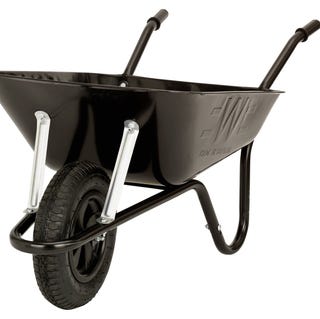
Walsall Wheelbarrows 85L Heavy Duty Builders Barrow - Black
Walsall Wheelbarrows
£50.00
Moving mulch, compost or soil to your garden beds? A wheelbarrow is an essential to save your back. One-wheeled, two-handled options are great for manoeuvrability, but if you're limited in strength you may want to opt for a dual-wheeled one.
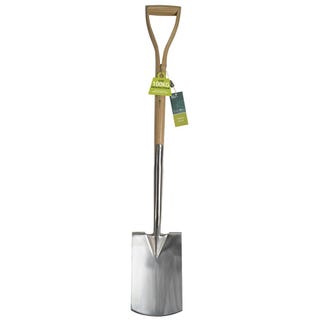
RHS Burgon and Ball stainless digging spade
A fantastic spade that's RHS-approved, this stainless steel choice is rust-resistant and won't need regular sharpening, making it easy to maintain. Long-handle spades like this are great for digging large plots and transferring soil (not to mention being easier on your back). This is also a sustainable choice with the handle made from FSC-certified ash.
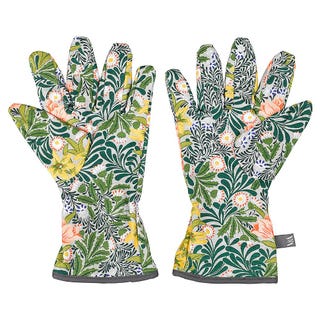
V&A William Morris Gardening Gloves
Add a splash of bold and beautiful colour to your garden activities with these stylish William Morris-print gloves. Not just for good looks, of course, they'll also protect you from thorns and brambles while you're working.
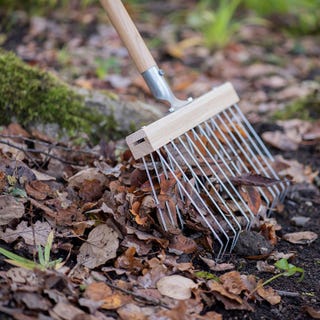
DeWit double leaf rake
Keep your garden looking spic and span and free from leaves and debris with this top-notch DeWit rake, which makes clearing up much more pleasurable.
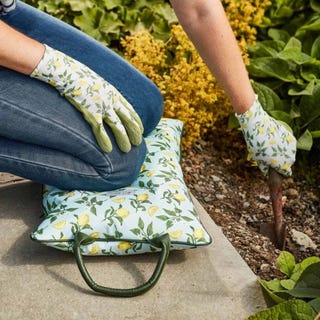
Sicilian lemon kneeler pillow
Protect your knees while getting in amongst the borders with this pretty kneeler. Or you might prefer strap-on knee pads so you don't have to keep moving it – BUY NOW, £14.99
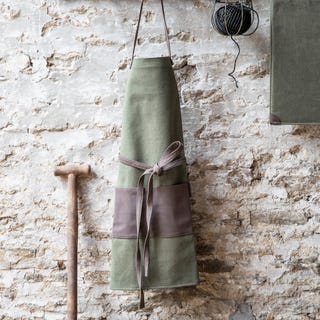
Garden Apron
Protect your clothes and get organised with a stylish gardening apron. Whether you're planting new flowerbeds, picking vegetables or potting around in the shed or greenhouse, this trusty apron will ensure clothes stay clean. What's more, all important tools, seeds and more can be stored close to hand in the front pocket.
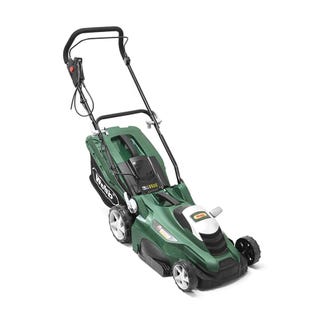
Webb electric rotary mower ER40 15"
Opt for a more eco-friendly electric lawnmower as opposed to a petrol one.
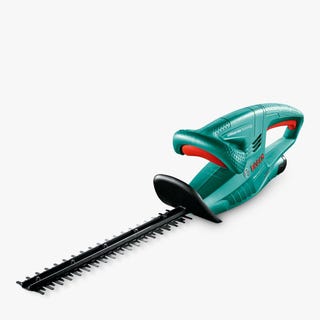
Bosch EasyHedgeCut 12-35 Cordless Hedge Cutter
Ensyure your hedges and borders looks super-smart with an easy-lift, lightweight, cable-free trimmer for quick and easy grooming.
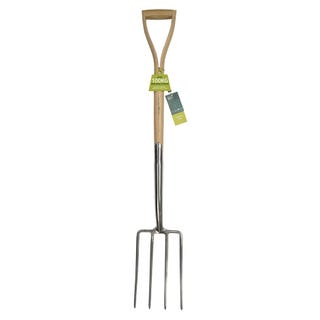
RHS Burgon and Ball stainless steel digging fork
An efficient tool for turning soil, garden forks can dig into dense soil better than a spade. This one made from rust-proof stainless steel with forged tines for extra strength, is a high-quality digging fork that's endorsed by the RHS. Need we say more?
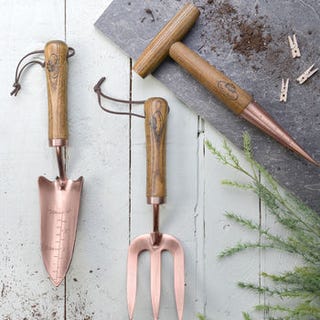
Garden Tools In Wood And Copper
The ultimates hand tool, trowels are wonderful for transplanting bedding plants and herbs, and planting containers. Hand forks, meanwhile, are perfect for taking out weeds. Not only are these a lovely on-trend copper, the material naturally doesn't rust and repels slugs and snails.
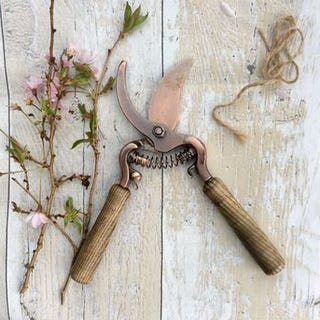
Personalised Copper Plated Garden Pruner Secateurs
Plants taking over? Pruning shears, or secateurs as they're also known, help reign in plants that are getting out of control. They're also perfect for trimming flowers, like roses. Why not match yours to your hand trowel and fork for stylish trio?
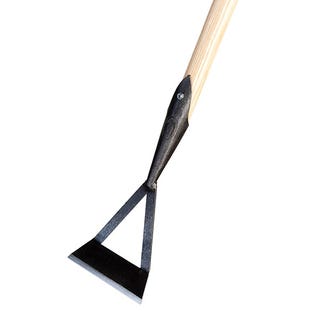
DeWit Dutch hoe
This well-crafted garden hoe will make light work of clearing weeds from your flower beds, borders and veg plots. The extra-long handle will also protect you from back strain.
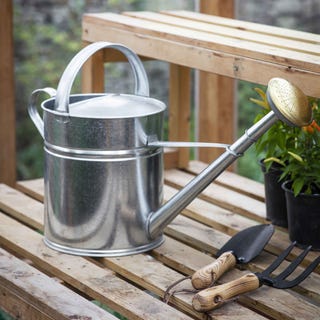
Galvanised Watering Can
All gardens need a trusty watering can to keep flowers and plants thriving. This durable one is available in three sizes, so you can choose the one to suit your outdoor space. The 1.5L is perfect for herb pots on plant stands. The 5L for small gardens with plant pots and flowers. And the biggest, the 10L for vast rural flowerbeds and herb gardens.
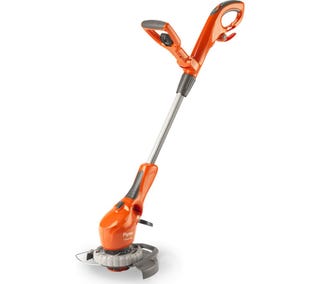
FLYMO Contour 500E Grass Trimmer
Tackle a variety of different tasks around your garden with ease with the simple press of a button. This handy trimmer can be used to edge the borders of your lawn, and a wheel is fitted to the trimmer, making it easier to follow the edges around walls and fences. There's also a shrubbing mode, making it simple to tackle difficult-to-reach areas, like under benches and bushes.
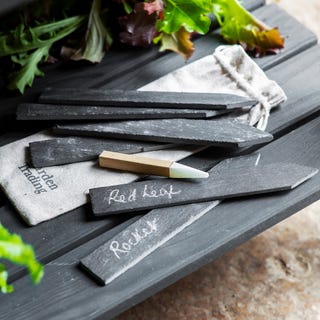
Set of 6 Plant Tags
Keep track of what you've planted with these stylish slate plant labels. The set comes complete with a square soapstone pencil, which allows you to interchange the labels with what's in season or current family favourites
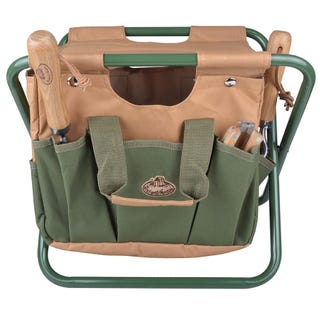
Tool stool
Keep everything together in a clever storage box that also doubles up as a foldable seat. You'll enjoy gardening so much more if you're comfortable and everything is to hand. The removable bag fastens with press studs and includes spacious side compartments for hand tools, dibbers, pens, string, and other necessities, and a central section perfect for larger items or a spot of lunch.
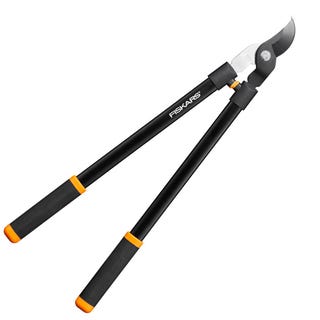
Fiskars Solid Lopper Bypass L11
Another handy cutting tool, loppers are basically long-handled pruning shears used to trim hard-to-reach areas and cut thicker branches.
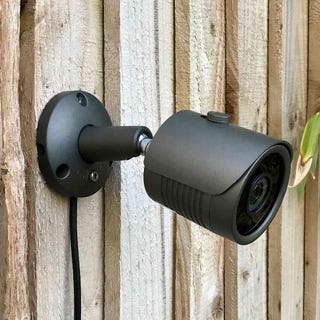
RSPB Garden wildlife camera - new
Don't miss the incredible action going on in your own garden. A good wildlife camera will capture all the exciting activity. This one from RSPB can be used to view anything from birds on a feeder, bird tables and nest box entrances, to hedgehogs and other nocturnal wildlife. It can also even be used to keep an eye on the garden or house as a security camera.
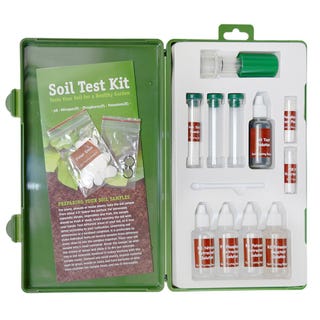
Soil test kit
Maintain an ideal growing environment with an easy-to-use soil tester kit. You can test the pH and nutrient profile of your soil, think soil acidity and levels of nitrogen, phosphorus and potash, to see if it needs extra help.
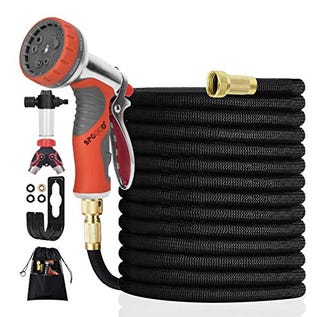
SPGOOD 50FT/15M Expanding Garden Hose Set with Splitter, Foam Water Bottle Expandable Garden Hose, 9 Futions Spray
Water is the foundation of your garden's life and it's important that your garden hose can reach and spray every area. If you buy one with an adjustable nozzle, it puts you in control of the water pressure and spray radius. You can also buy nozzles separately.
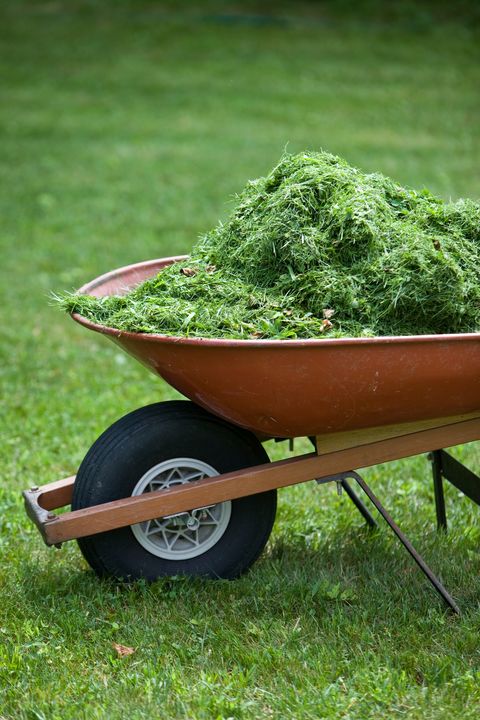
13. Use the cuttings to make hay
RHS Chief Horticulturalist Guy Barter says that allowing our cuttings to turn into hay is great for seed-eating birds. He explains: "Leave the summer mown grass in place for a few sunny days to become 'hay' and release seeds to refresh the lawn for next year and also provide food for seed-eating birds and other wildlife. The 'hay' can then be removed and composted."
14. Or compost your grass cuttings
"Removing and composting all grass mowings also supports wildlife by reducing soil fertility," continues Guy. "Running down fertility, assuming no fertiliser is applied, leads to turf becoming more sparse which allows room for wildflowers, particularly clovers, and wildlife."
In need of some positivity, heartwarming countryside news and spring gardening advice? Sign up to our free Country Living newsletter for your weekly dose of escapism.
SIGN UP
Love what you're reading? Enjoy Country Living magazine delivered straight to your door every month with Free UK delivery. Subscribe now to save on the shop price + get instant digital access to the latest issue!
SUBSCRIBE
This content is created and maintained by a third party, and imported onto this page to help users provide their email addresses. You may be able to find more information about this and similar content at piano.io
Cut Long Grass For Hay Gardening
Source: https://www.countryliving.com/uk/homes-interiors/gardens/advice/a1522/how-to-mow-lawn-first-time-year/
Posted by: levesqueyounproyes1962.blogspot.com
0 Response to "Cut Long Grass For Hay Gardening"
Post a Comment