

How Many Animals Are In The Taiga
On this folio we take a look at taiga animals, including some of the most iconic animals that live in the taiga biome, as well equally a few species that are non quite also-known.
Taiga Animals: A List Of Animals That Live In The Taiga Biome
Animals that live in the taiga need to be hardy and adaptable: the long, common cold winters mean that little nutrient is available for much of the year and that the ground is frequently covered in snow.
Adaptations for living in the taiga include: hibernating during the coldest parts of the year, migrating during the winter months; having a thick coat for insulation; and stashing food during the summer for eating during the winter.
- You can find out more about the taiga biome on this page: What Is The Taiga Biome?
- Discover the astonishing plants of the taiga hither: Taiga Plants with Pictures & Facts
Arctic Grayling

- Scientific name: Thymallus arcticus
- Conservation status: To the lowest degree Concern
The Arctic grayling is a medium-sized freshwater fish in the family Salmonidae (the family that also contains fish such every bit salmon and trout). Like all graylings, their most distinctive feature is a big, sail-like dorsal fin.
The Arctic grayling is nowadays in well-oxygenated rivers and lakes in the taiga forests of both Northward America and Eurasia.
Bears
Dark-brown Bear
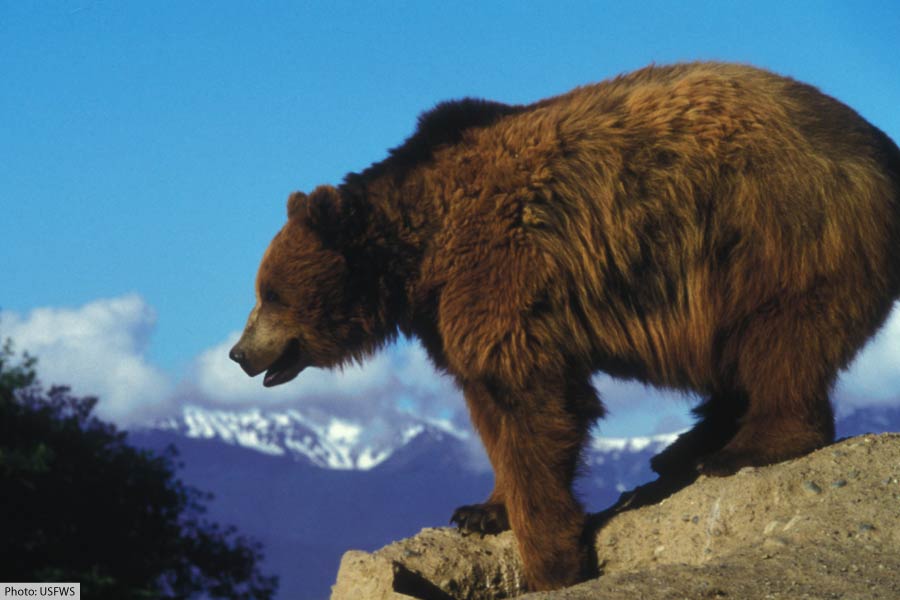
- Scientific name: Ursus arctos
- Conservation status: Least Business organisation
American Black Bear
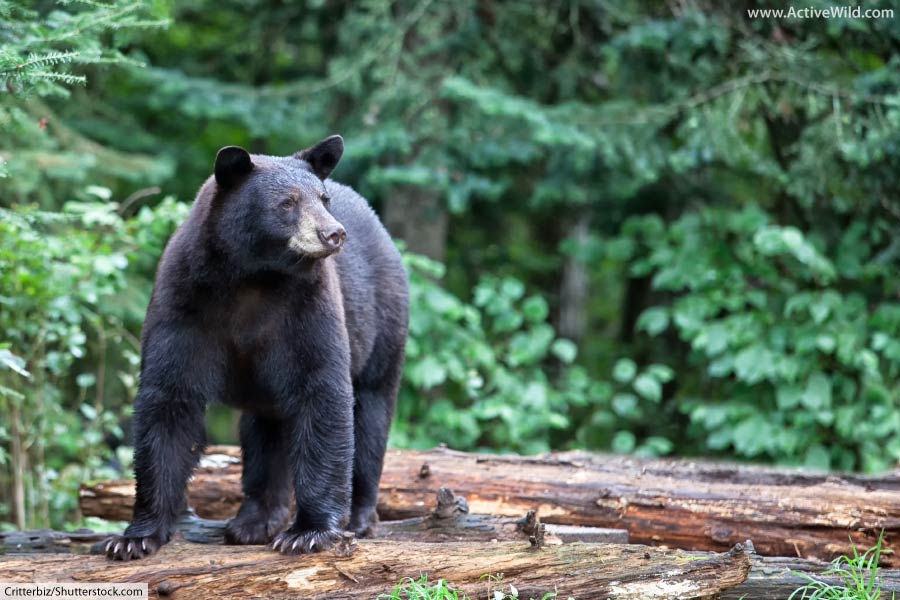
- Scientific proper name: Ursus americanus
- Conservation status: To the lowest degree Business organisation
The dark-brown bear is the largest predator found in the taiga biome. The largest males tin grow up to 600 kg in weight and stand 9 ft. (2.viii 1000) tall when raised up on their hind legs. Size is highly variable between individuals and subspecies.
Several subspecies of brown carry live in the taiga, including the Grizzly carry (found in North America) and the Eurasian dark-brown comport (constitute in Europe and North Asia)
The American black bear is establish in the taiga (and other habitats) of Northward America. The species grows to a maximum weight of around 1,320 lb. (600 kg) and a height of around 7 ft. (2.one m). Upwardly to 85% of a black bear's diet consists of plants.
- You can find out more than nearly the brown behave here: Brown Bear Facts
- Find out more near the American black bear here: American Blackness Carry Facts
Beaver
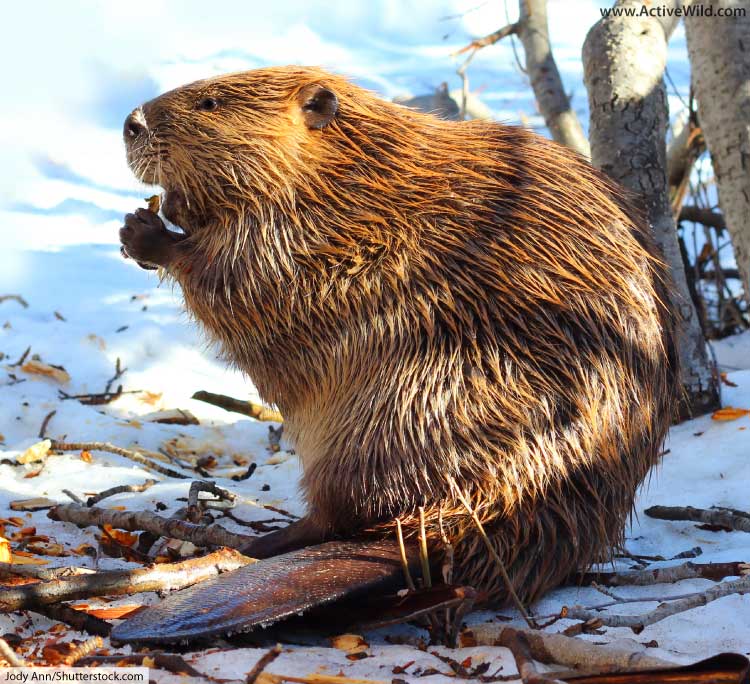
North American beaver
- Scientific name: Castor canadensis
- Conservation status: Least Concern
Eurasian beaver
- Scientific name: Castor cobweb
- Conservation condition: Least Concern
There are two species of beaver: the N American beaver and the Eurasian beaver; they are establish in the taiga of Northward America and Eurasia respectively.
Both beaver species are a like size, with the American beaver having the largest recorded size, only the Eurasian beaver being slightly larger on average. The capybara is the merely rodent larger than the Northward American beaver.
Beavers play an important role in the taiga habitat. Past building dams beyond rivers and streams to provide protection and a source of food for themselves, they create wetlands which are of import habitats for other taiga animals.
- You can find out more about the North American beaver here: Due north American Beaver Facts
Boreal Chorus Frog

- Scientific name: Pseudacris maculata
- Conservation condition: To the lowest degree Business organization
The taiga, with its long winters and cold climate, is non an ideal habitat for amphibians. One species that does manage to survive in the cold n is the boreal chorus frog, an amphibian found in Canada and parts of the United states.
The boreal chorus frog is a relatively pocket-size frog; fifty-fifty the largest specimens are under 4 cm in length. It has a greenish-dark-brown body, usually with iii darker stripes running forth its back (although colors and markings are variable).
The species' call is said to resemble a finger existence run downwardly the teeth of a comb.
Burbot

- Scientific name: Lota lota
- Conservation status: Least Business concern
The burbot is a freshwater relative of the cod. It is the only member of the cod family which isn't found in a marine surroundings. The species is found in northerly regions of North America, Europe and Asia.
The burbot has a long thin trunk with very small scales, giving it the appearance of a catfish. Its maximum weight and length are 10 lb. and 3 ft. respectively.
Typically found in deep, common cold lakes and streams, the burbot, likewise as beingness present in the taiga biome, is likewise present farther s.
Caribou / Reindeer
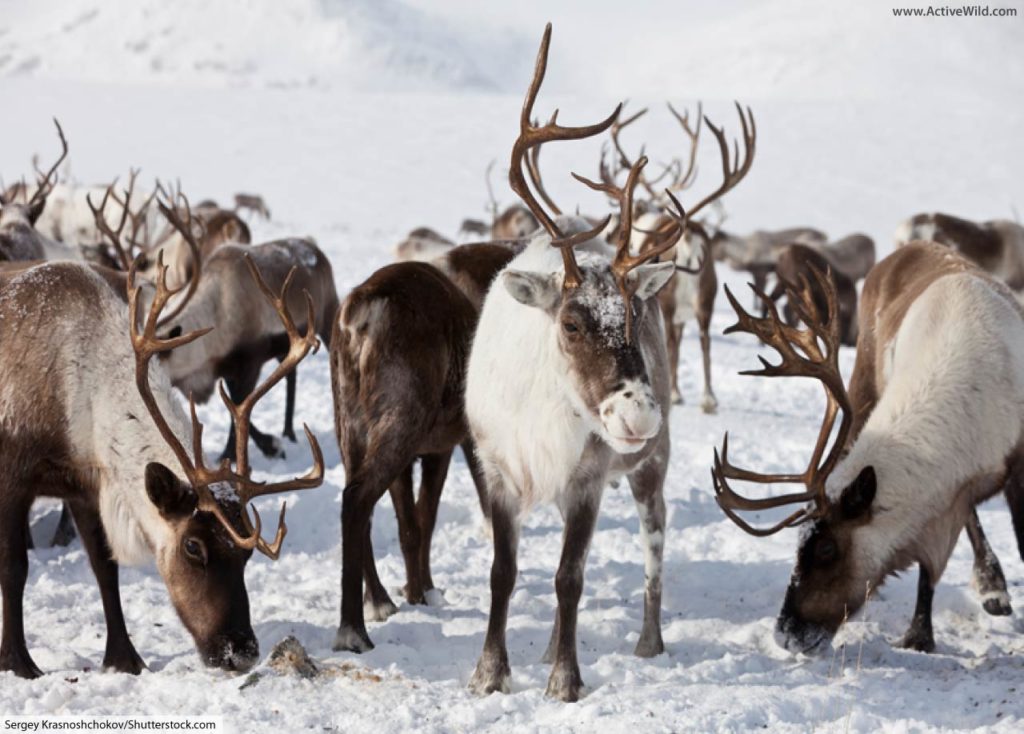
- Scientific proper noun: Rangifer tarandus
- Conservation status: Vulnerable
The caribou, also known as the reindeer in Europe, is a large member of the deer family, Cervidae. This herbivorous species is i of the largest animals that live in the taiga. Female caribou are the just female deer to grow antlers.
Caribou herds can contain hundreds of thousands of individuals, and some herds migrate several grand miles in a year.
- Y'all can find out more about this species here: Caribou Facts
Mutual European Adder
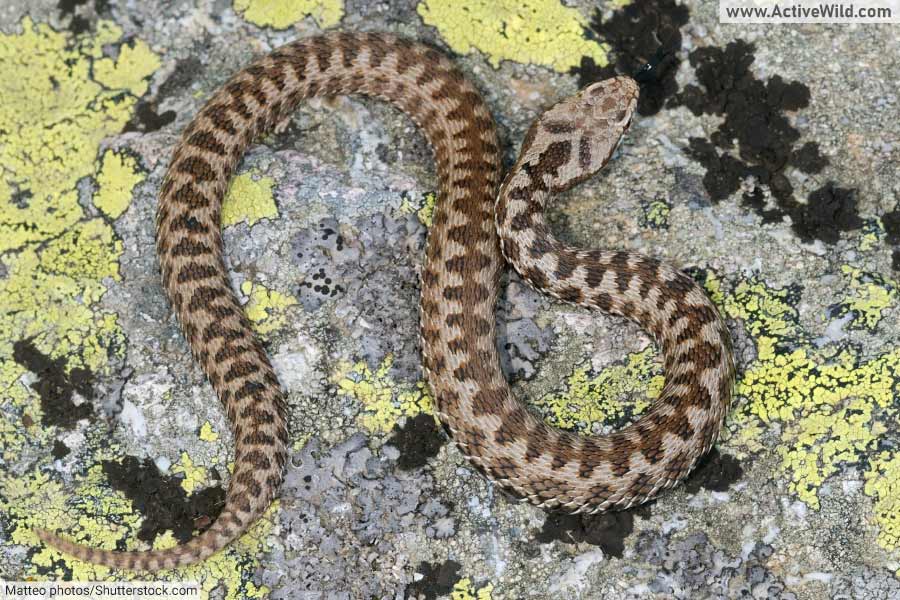
- Scientific proper name: Vipera berus
- Conservation condition: Least Concern
The taiga does not offer a particularly suitable habitat for reptiles, and for this reason relatively few species are institute in the cold forests of the north. Ane reptile that does manage to make a abode in the taiga is the common European adder. The species is found further north than any other snake.
The common European adder tin can be recognized past the nighttime 'zigzag' pattern running down its back. Although the species is venomous, its bite is rarely life-threatening.
Fisher

- Scientific name: Pekania pennant
- Conservation condition: Least Concern
The fisher is one of several mustelids (members of the weasel family, Mustelidae) that alive in the taiga. This true cat-sized mammal is as well known every bit the 'fisher cat', although information technology neither regularly eats fish nor is a member of the true cat family unit.
The fisher is found in Canada and northern United States. It is one of the few predators that regularly targets porcupines.
Golden Eagle
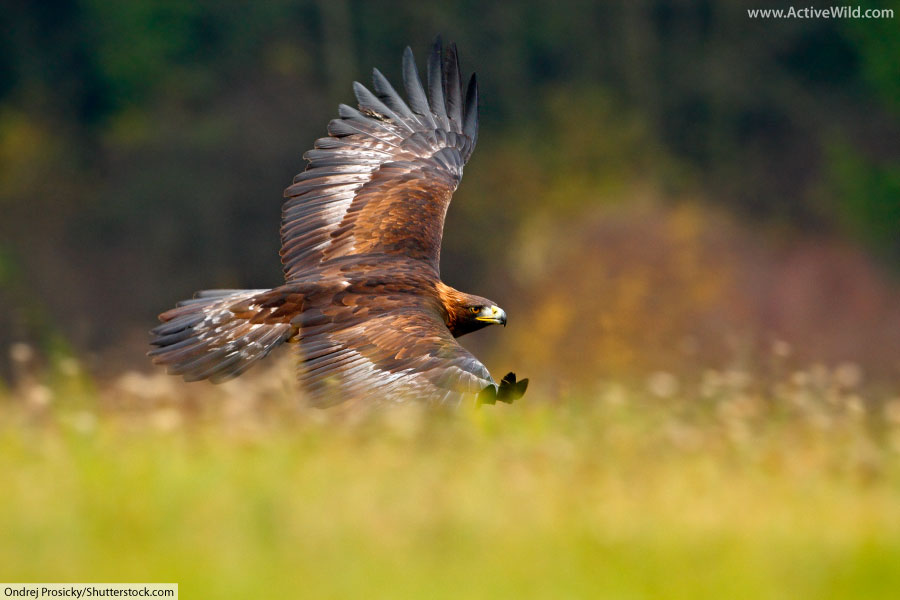
- Scientific name: Aquila chrysaetos
- Conservation status: To the lowest degree Concern
Although commonly non present in dense forests, the aureate eagle tin be establish in open up regions at the edge of the taiga in both N America and Eurasia. Information technology also occupies a number of other habitats in more temperate regions.
Named for the aureate-brown color of its feather, the golden eagle'south wingspan tin can reach 88" (224 cm). It hunts mammals, snakes and birds, and will likewise take carrion.
Gray Jay

- Scientific name: Perisoreus Canadensis
- Conservation status: Least Concern
The gray jay is 1 of the smaller members of the crow family Corvidae. It has a pale face and breast, with night gray wings and, depending on subspecies, a fully or partly grey head.
The greyness jay survives the long, cold winters of the taiga by caching food in the fall. A single gray jay tin hide nutrient in thousands of locations, and is able to remember where they are upwards to several months later.
Not bad Grayness Owl

- Scientific proper noun: Strix nebulosi
- Conservation status: Least Business organization
The bang-up gray owl (great greyness owl in British English) is ane of the world'southward largest owls in terms of length, but much of its apparent bulk consists of thick plumage; several other species of owl are heavier.
The species is crepuscular (agile at sunset and dawn) and feeds almost entirely on voles.
The great grey owl is institute in taiga forests of both North America and Eurasia.
Lynxes
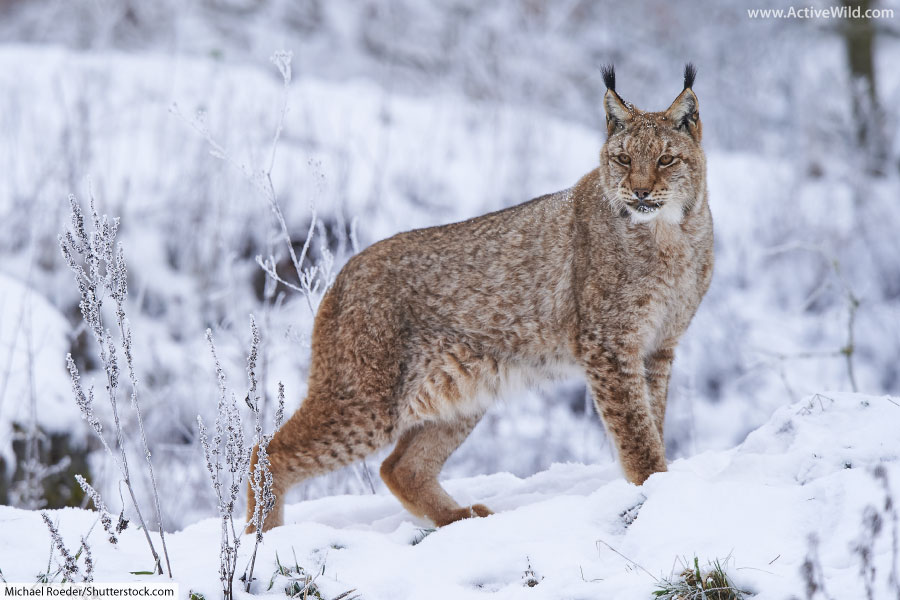
Genus: Lynx
Canada Lynx
- Scientific name: Lynx canadensis
- Conservation status: Least Concern
Eurasian Lynx
- Scientific name: Lynx lynx
- Conservation status: Least Business organisation
Lynxes are wild cats in the genus Lynx. At that place are iv species of lynx, ii of which, the Canada lynx and the Eurasian lynx, are particularly associated with the taiga biome.
The bobcat (another member of the Lynx genus) too may be found in the taiga, but is also found in temperate and even desert habitats.
Lynxes are more often than not alone animals. They rely on stealth to capture their prey, which consists primarily of mammals and birds.
The Eurasian lynx – the largest of the lynxes – targets animals as large as deer and even immature moose. The Canada lynx preys mainly on the snowshoe hare.
- You tin can find out more than nigh this species hither: Eurasian Lynx Facts
Moose
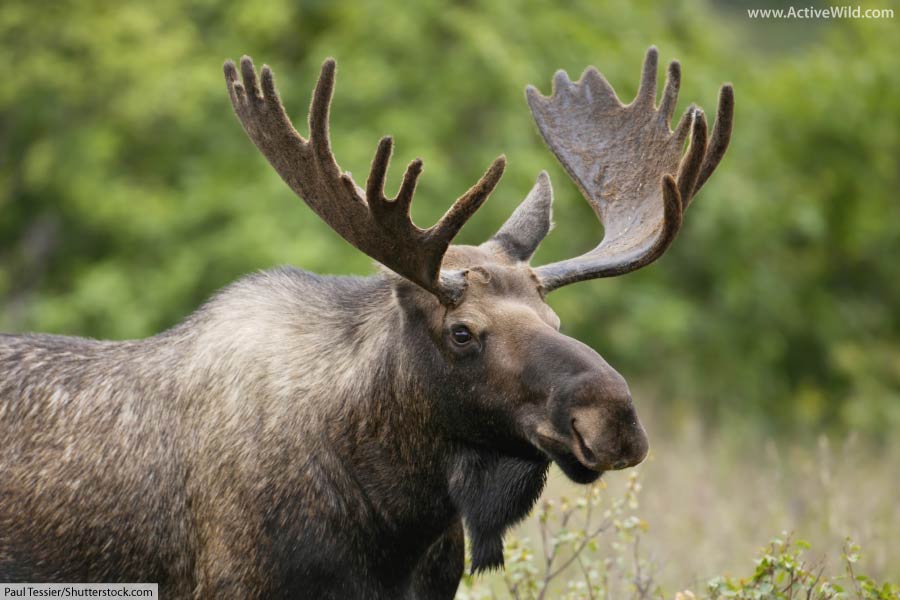
- Scientific name: Alces alces
- Conservation status: To the lowest degree Concern
The moose is too sometimes called an elk in Europe. It is the largest member of the deer family unit, with the largest bulls continuing half dozen.five ft. (2 yard) at the shoulder, and weighing up to 700 kg (1,543 lb.).
From spring to tardily fall male moose are hands identified by their size and their large palmate antlers. (Palmate antlers are wide and apartment with short points.) The antlers are shed in the wintertime and commencement to regrow in leap.
Both male and female moose have long faces, long upper lips, and a fold of skin known as a dewlap that hangs under the chin.
Moose are herbivores that feed on a wide diversity of plant life, including aquatic plants.
- You lot can discover out more about this species hither: Moose Facts
Mosquito
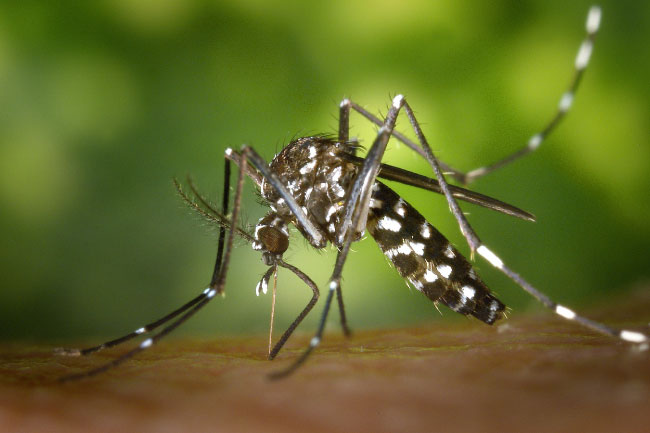
- Family unit: Culicidae
Mosquitoes are small flies in the family Culicidae. Female mosquitoes gain nutrients by feeding on the blood of other animals, and accept special mouthparts for piercing skin and drawing in blood.
Mosquitoes are common in the taiga, sometimes forming large clouds of insects. Although the wintertime common cold kills off all adult mosquitoes, their eggs can survive in the freezing water ready to hatch in the leap,
Northern Crimson-Backed Vole

- Scientific name: Myodes rutilus
- Conservation status: Least Concern
Voles, including the northern red-backed vole, form an important part of the taiga food chain. These small-scale rodents form a major function of the diets of animals such every bit owls and martens.
The northern carmine-backed vole is constitute in both North American and Eurasia. Too as living in the taiga, it is also found in tundra.
Voles tin be distinguished from mice past their shorter, hairier tails and smaller ears.
Pino Grosbeak

- Scientific proper noun: Pinicola enucleator
- Conservation status: To the lowest degree Business organisation
The pine grosbeak is a large, plump finch that lives in the taiga and mountainous regions. The plumage of males is red, while females are gray-light-green. Both sexes have black wings with white bars and powerful, curved blackness bills.
The pine grosbeak uses its strong neb to eat seeds, basics and a variety of other constitute matter, every bit well every bit insects. The species breeds in the taiga and migrates south in colder weather, usually only going as far as the taiga's border.
Raven (Mutual)
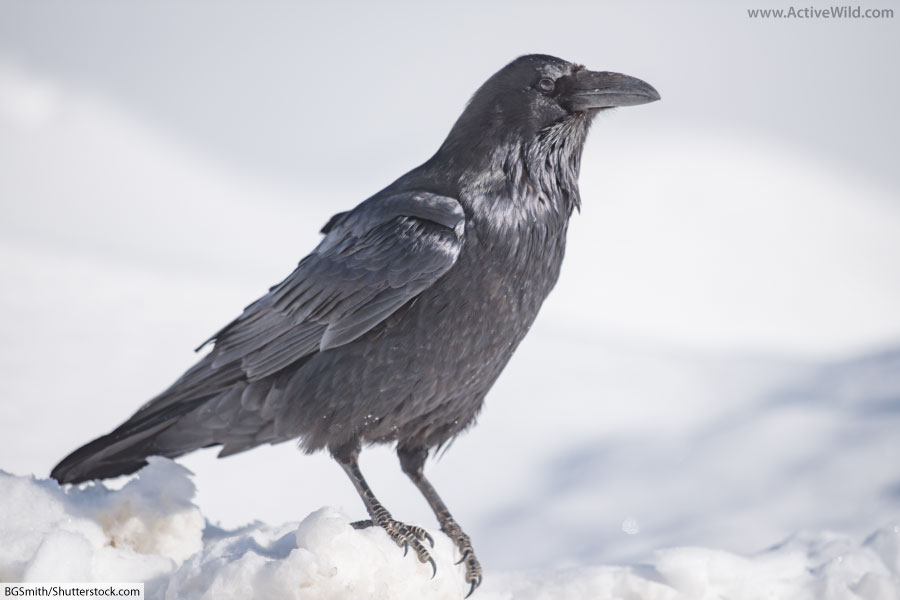
- Scientific proper name: Corvus corax
- Conservation condition: To the lowest degree Concern
The raven is the largest fellow member of the crow family Corvidae, and the widest-ranging. This large black bird is found throughout much of Due north America and Eurasia.
The mutual raven mates for life and is often seen in pairs. Information technology can be distinguished from crows by its large size, diamond-shaped tail and its acrobatic mid-air rolls.
Red Crossbill

- Scientific name: Loxia curvirostra
- Conservation status: Least Business organisation
Crossbills are finches with distinctive bills which cross at the tips. Males have reddish plume, while females are olive-green/grey. The bills are particularly adapted for prizing open up pine cones, allowing the bird's tongue to reach in and remove the seeds.
The red crossbill moves to wherever food is nearly abundant. It is found in taiga and temperate forests in North America and Eurasia, where it is known as the common crossbill.
Ruby-red Fox
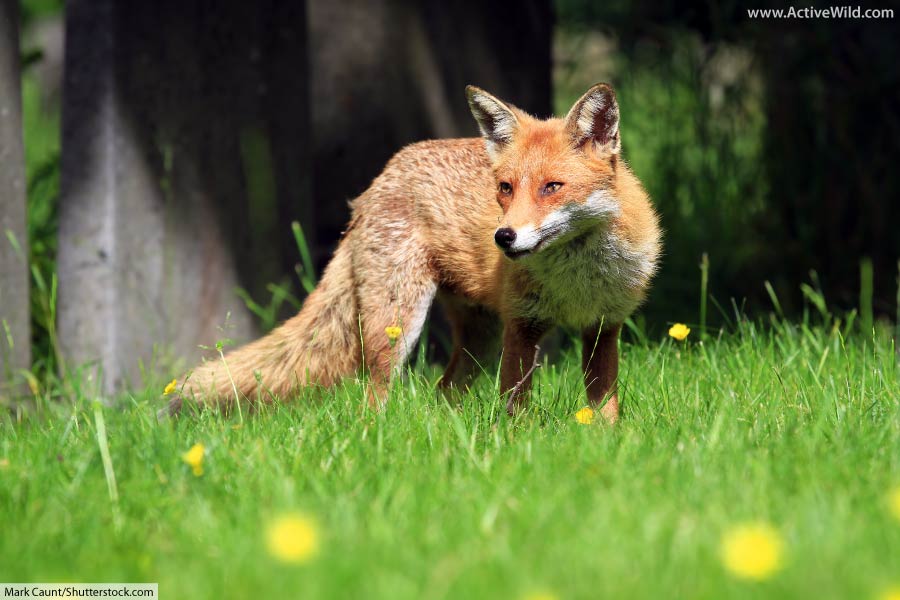
- Scientific proper name: Vulpes vulpes
- Conservation status: Least Business organization
The cherry-red play a joke on is a widespread and extremely adaptable fellow member of the dog family Canidae. It is able to inhabit wilderness areas such as tundra and taiga forests, but tin as well alive aslope homo, and is resident in many large cities.
Larger than any other true fox (i.eastward. a member of the genus Vulpes), the red fox hunts a broad range of small-scale mammals and birds, and will also consume feces. Information technology ordinarily hunts lonely, using sight and its excellent senses of hearing and aroma.
Salmon
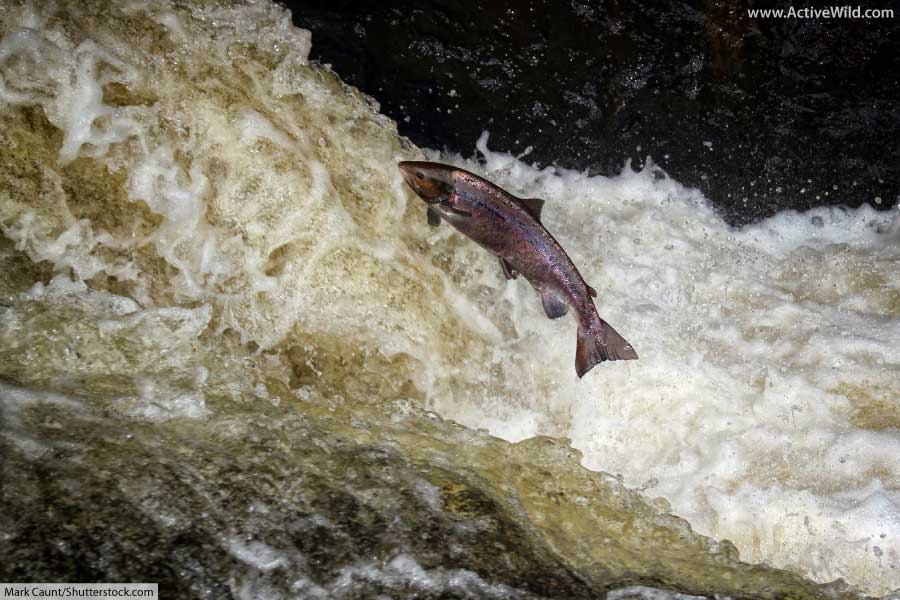
- Genus: Salmo
At that place are several species of salmon found in the rivers of the taiga, including chum, chinook and pink salmon.
Salmon are migratory fish that hatch and develop in freshwater rivers earlier making their fashion to the sea. After reaching sexual maturity they make their way back into freshwater (often to the very identify that they were spawned) in gild to brood.
The annual run of spawning salmon is an important source of food for many taiga animals, in particular bears.
Siberian Musk Deer

- Scientific proper noun: Moschus moschiferus
- Conservation status: Vulnerable
Musk deer are in a dissimilar family, Moschidae, to 'true' deer in the family Cervidae. Their name comes from the musk gland, present only in males, which produces a scented substance.
The Siberian musk deer is constitute in the taiga of eastern Russia. It is a pocket-size species that relies on its high speed and agility to escape predators.
The species is heavily hunted for its musk and its population is decreasing.
Snowshoe Hare
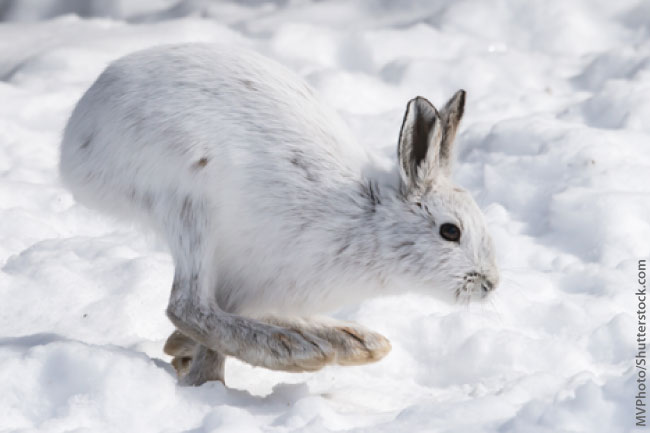
- Scientific name: Lepus americanus
- Conservation status: Least Business
The snowshoe gets its proper noun from its large hind feet, which are adapted to prevent the hare sinking into the snowfall which covers the taiga for much of the year. The furry soles of the hare's anxiety provide both grip and insulation from the cold.
From September the snowshoe hare's brownish coat begins to turn white for camouflage confronting the snow. In the spring this procedure is reversed.
- You can find out more nigh this species here: Snowshoe Hare Facts
Tiger

- Scientific proper name: Panthera tigris
- Conservation status: Endangered
You may remember of the tiger as existence a creature of tropical forests, only the species is besides present in the taiga of Russia'due south Far East. Here the largest member of the cat family unit Felidae preys on a number of medium and large animals, including wapiti, moose, and several other species of deer.
The Siberian tiger was once considered to be a separate subspecies of tiger, but contempo research has found there to exist only two subspecies. Today, the Siberian tiger is placed in the same subspecies, Panthera tigris tigris, as the Bengal tiger and a number of other previously separate subspecies.
- You can discover out more near this species here: Tiger Facts
Wapiti / Elk
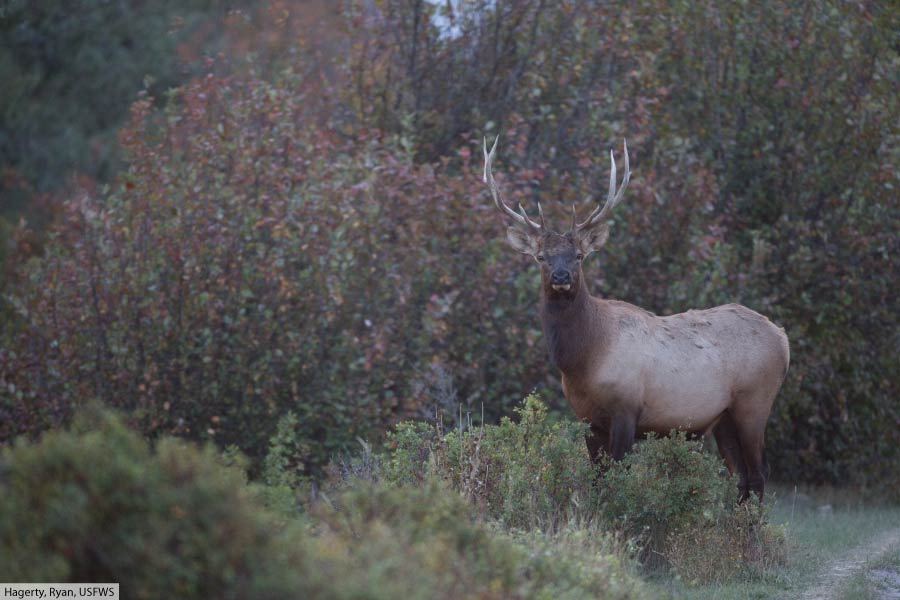
- Scientific name: Cervus Canadensis
- Conservation status: Least Concern
Wapiti are as well known as elk, especially outside of N America. They are the second-largest fellow member of the deer family unit Cervidae; only the moose is larger.
The species' North American name means 'white', or 'white rump' in the language of Due north American indigenous peoples.
The antlers of male person wapiti achieve lengths of up to i.ii m (3.nine ft.). Males can exist heard bellowing to one another during the annual rut.
Whooping Crane
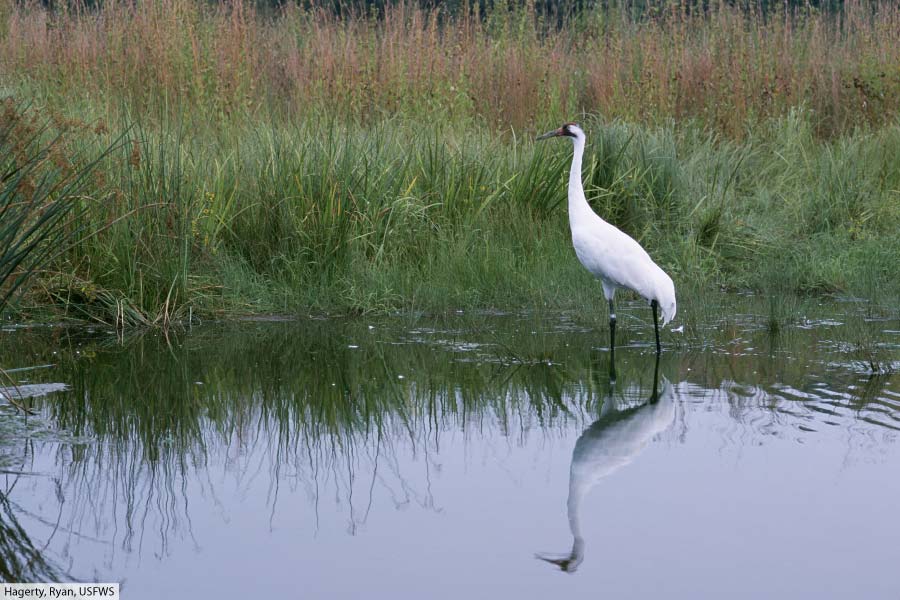
- Scientific name: Grus Americana
- Conservation condition: Endangered
The whooping crane gets its name from its loud telephone call, which can be heard several miles away. The species stands at around 4.5 ft., and is the tallest bird of North America.
The species was one time heavily hunted, and in the 1930'south fewer than xxx whooping cranes remained. Thanks to conservation efforts there are now effectually 250 mature individuals in the wild, just the species is notwithstanding endangered.
The whooping crane breeds in the taiga and migrates to the southern United States in the winter.
Wolf
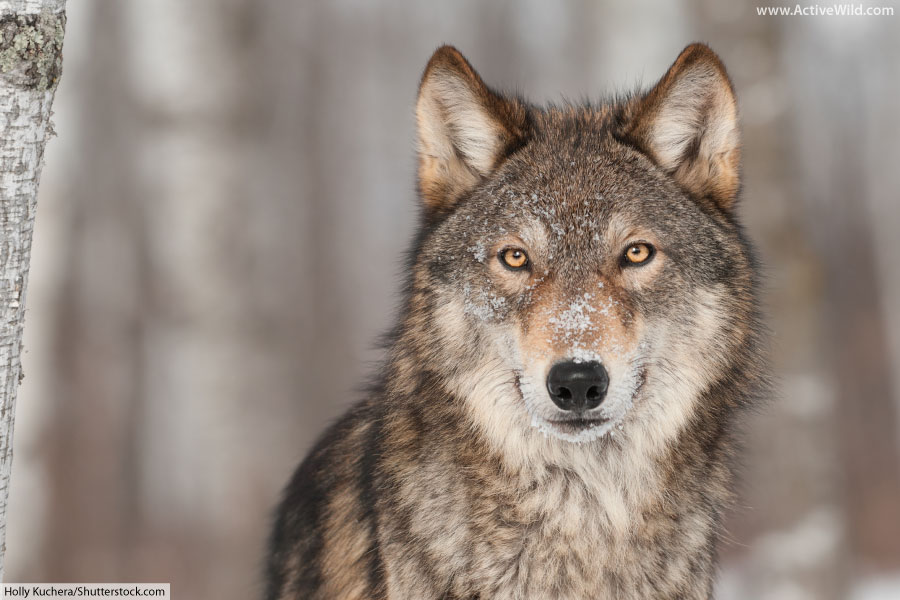
- Scientific name: Canis lupus
- Conservation status: To the lowest degree Business concern
One of the best-known animals of the taiga, the wolf is an adaptable animal which is also found in a diversity of other habitats.
The wolf is the largest fellow member of the dog family Canidae. Information technology lives in groups known as packs which are led by an blastoff pair. Wolves apply teamwork to pursue and capture their prey.
Wolverine

- Scientific name: Gulo gulo
- Conservation status: Least Concern
The wolverine is the largest country-home fellow member of the weasel family, Mustelidae (the sea otter is the heaviest, but spends almost of its life in the bounding main). Like many taiga animals, the wolverine is found in both Due north America and Eurasia.
Although primarily a scavenger, the wolverine is known for its strength and ferocity. This dog-sized mammal can accept down animals as large as caribou.
- You tin can find out more near this species here: Wolverine Facts
Wood Bison
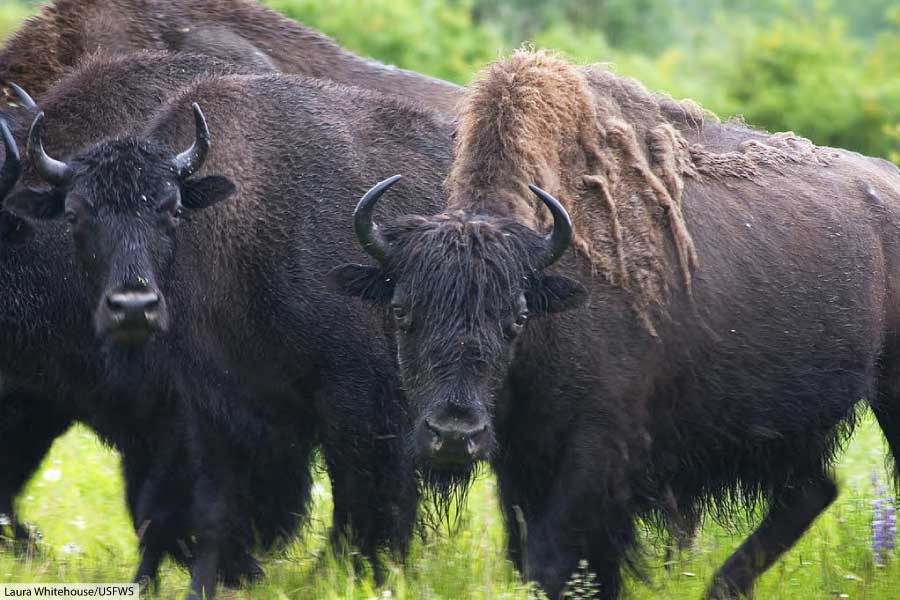
- Scientific name: Bison bison athabascae
- Conservation condition (American bison): Virtually Threatened
The wood bison is the larger of the two subspecies of American bison (the other being the plains bison).
The American bison is too known as the 'buffalo'. Although it is the heaviest beast of North America, the moose – another taiga creature – is taller.
The wood bison subspecies is found in Canada and Alaska. Conservation efforts have seen a total population of effectually 200 animals in the 1950's ascension to around eleven,000 today.
The largest free-roaming wood buffalo lives in Wood Buffalo National Park in Alberta, Canada. The park was established in 1922 with the purpose of conserving the subspecies.
Taiga Animals: Discover More with Active Wild
- Yous tin find out more nearly the taiga biome here: Taiga Biome Facts, Pictures & Information
- Find the amazing plants of the taiga here: Taiga Plants with Pictures & Facts
Discover animals from other habitats:
- Rainforest Animals List with Pictures & Facts
- Arctic Animals Listing with Pictures & Facts
- Antarctic Animals List with Pictures & Facts
- Australian Animals List with Pictures & Facts
- African Animals List with Pictures & Facts
Go an Animal Expert
- Beast Kingdom: The Ultimate Guide
- Animals A to Z
Source: https://www.activewild.com/taiga-animals/
Posted by: levesqueyounproyes1962.blogspot.com
0 Response to "How Many Animals Are In The Taiga"
Post a Comment